Sancerre soil family
Terres Blanches
Pale marl and limestone
Clay-limestone marl, visibly pale in many parcels and concentrated especially in the western part of the appellation.
See connected places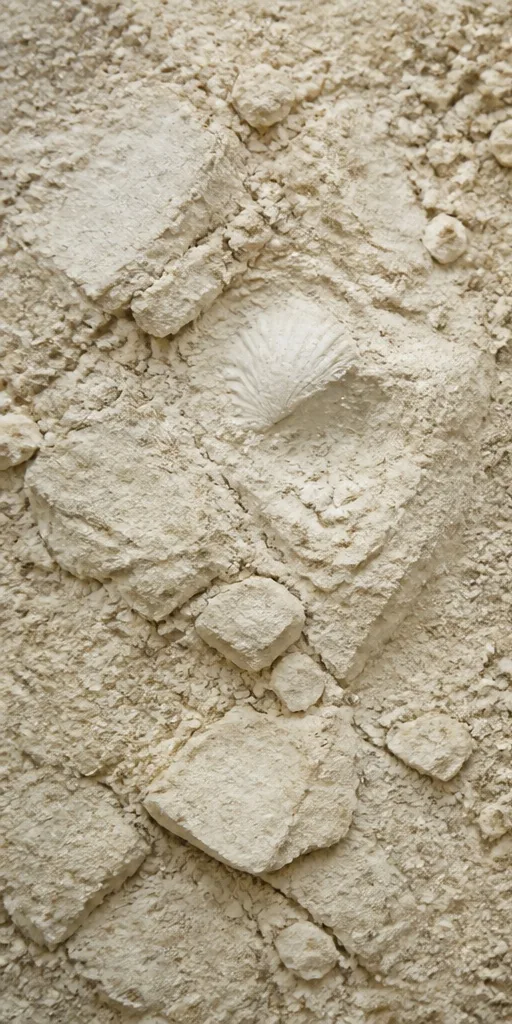
- Broad geology
- Commonly described in regional literature as Kimmeridgian marl and limestone; individual parcels are more complex than a single label.
- Physical character
- Marly, clay-bearing ground with abundant limestone.
- Drainage
- Generally more water-retentive than the shallowest caillottes, though slope, depth and farming materially change drainage.
- Heat behavior
- Exposure and moisture matter
Simple explanation
What is Terres Blanches?
Clay-limestone marl, visibly pale in many parcels and concentrated especially in the western part of the appellation.
Go deeper
Origin and structure
This part of the Library sets Terres Blanches within the sedimentary history of the eastern Loire. Geological labels used by growers can be broad, while vineyard-scale variation in depth, clay content, stones and subsoil remains significant.
Formation
A geological history measured over millions of years, summarized from specialist and regional sources.
At the surface
Texture, stone content and depth can change substantially within the broad family.
Below the roots
Subsoil influences water movement and rooting conditions, alongside farming and seasonal weather.
Across the appellation
Where it is found
appellation View map layer →
Most strongly associated with the western hills of Sancerrois.
Villages commonly associated
Tasting with precision
How people describe the wines
Editorial interpretation: growers and writers often associate these sites with breadth, texture and a slower-unfolding shape.
Common associations
- Texture
- Shape
- Aromatic register
- Length
Use this language carefully
Association, not a guaranteed sensory outcome.
The whole vineyard
Soil is only one part
No responsible reading of terroir stops at soil. The expression of a Sancerre wine emerges from an interacting system:
Exposure
The direction and duration of sun and wind across a slope.
Elevation
Temperature, airflow and season length can shift with height.
Vine age
Root systems, yield and plant material vary from parcel to parcel.
Vintage
Rain, heat, frost, disease pressure and harvest conditions reset the context.
Farming
Soil work, cover crops, canopy choices and yields shape the growing environment.
Harvest timing
Ripeness, acidity and phenolic development depend on decisions in the season.
Winemaking
Pressing, vessels, lees, oxygen, oak and time all leave an imprint.
Producer style
Experience, taste and intention connect every choice from vine to bottle.
Knowledge graph
Follow Terres Blanches
Producers
- Alphonse Mellot →
- Pascal Cotat →
- François Cotat →
- Gérard Boulay →
- Domaine Vincent Pinard →
- Domaine Claude Riffault →
- Henri Bourgeois →
- Domaine Lucien Crochet →
- Domaine Fouassier →
- Domaine Thomas-Labaille →
- Domaine Paul Prieur et Fils →
- Domaine Delaporte →
Representative wines
- La Moussière, Alphonse Mellot →
- Les Monts Damnés, Pascal Cotat →
- La Grande Côte, François Cotat →
- Clos de Beaujeu, Gérard Boulay →
- Les Boucauds, Domaine Claude Riffault →
- Les Monts Damnés, Domaine Thomas-Labaille →
Vineyards
- Les Monts Damnés →
- La Grande Côte →
- Le Cul de Beaujeu →
- Les Monts →
- La Moussière →
- Les Monts Damnés →
- Les Culs de Beaujeu →
- Clos de Beaujeu →
- La Côte →
- Chêne Marchand →
- Petit Chemarin →
- Grand Chemarin →
- Les Boucauds →
- Les Chasseignes →
- Les Denisottes →
- La Côte des Monts Damnés →
- Le Clos de Bannon →
- Le Vallon →
- La Côte d'Amigny →
Research record
Sources & terminology
Geological terms are translated for a broad readership while retaining the distinctions made in regional and specialist sources.